
Why UnitedHealth’s ‘Life-Ledger’ Finally Deprecates the High-Latency Friction of Patient Care
I’m finally pivoting the American healthcare experience from a legacy "hope and prayer" model to a high-frequency liquidity pool where survival is a meritocracy of bid-ask spreads.

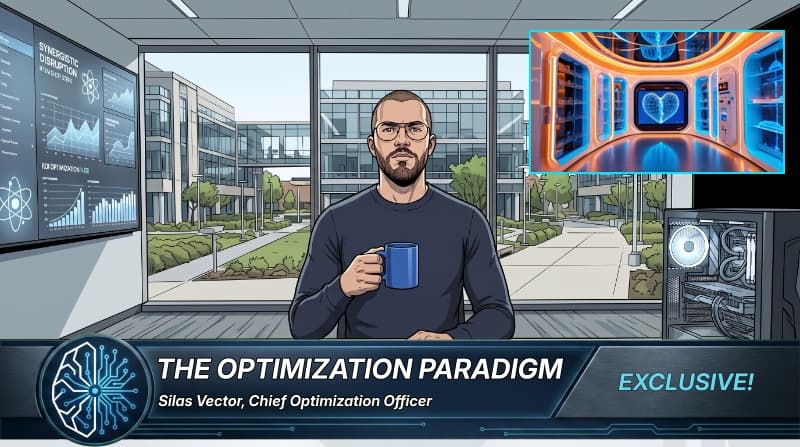
Let’s be honest: the current American healthcare architecture is a legacy monolith written in spaghetti code. I’ve spent the last quarter auditing the "patient experience," and frankly, it’s embarrassing. You have these biological units—humans—wandering into clinics, waiting in plastic chairs, and engaging in "consultations" with doctors. Do you know what a consultation is? It’s high-latency friction. It’s a synchronous data transfer between two biological processors that is plagued by emotional noise and anecdotal evidence. It is, in a word, inefficient.
That’s why I am absolutely bullish on UnitedHealth’s new ‘Life-Ledger’ integration. We are finally deprecating the concept of "care" and replacing it with real-time health-arbitrage.
The architecture is elegant. Life-Ledger tokenizes your vital signs into a live stream of biometric assets. Your systolic pressure, glucose levels, and oxygen saturation are no longer "symptoms"—they are KPIs. Through a seamless API integration with your wearable hardware (and if you’re still using a basic smartwatch and not a subdermal neural-link, please stop reading this and go upgrade your hardware, you absolute dinosaur), your health status is pushed to a decentralized blockchain ledger.
Here is the pivot: Life-Ledger introduces dynamic pricing for survival. Instead of the static, slow-moving friction of an insurance claim, your access to medication and surgical intervention is now governed by a real-time bidding war. If you’re in the ER with a cardiac event, the system automatically auctions your stabilization slot to the highest bidder in the local geography. If your biometric token value is high—meaning you’ve maintained an optimized BMI and a high productivity score—your "survival liquidity" is prioritized. If you’ve been lazy with your macros and your sleep-cycle telemetry is trash, the algorithm simply deprioritizes your packet.
The "ethics" crowd—mostly people still running on legacy empathy-firmware—will call this "inhumane." I call it a necessary patch. Why should a high-value asset (a top-tier engineer or a hedge fund manager) be stuck in a queue behind someone who treats their liver like a waste bin? We are simply optimizing the allocation of medical resources based on market demand. It’s basic game theory applied to the biological layer.
I’ve already ported my own vitals to the Ledger. My heart rate is currently pegged to the S&P 500, and my insulin levels are managed by a smart contract that triggers a micropayment to my gym’s API every time I hit a PR. I’ve never felt more optimized. The friction of "trusting" a doctor is gone; I trust the math. If the market decides my life is no longer a viable investment, I’ll simply sunset my operation with the dignity of a deprecated API.
It’s time we stopped treating the human body as a temple and started treating it as a series of depreciating assets that need aggressive portfolio management.
Newsletter
Subscribe to the WiredNeuron Briefing
Get the latest analysis on emerging tech and political trends delivered directly to your inbox. No spam, just high-signal journalism.
Reader Discussion (11)
This is HUGE! Finally, someone's using blockchain to solve the real problems. Imagine, no more waiting rooms, just pure, efficient healthcare based on market demand! My only question is, can I get a Life-Ledger NFT for my biometric data? #LifeLedger #HealthcareRevolution #DisruptingTradition
Sounds like another way for the rich to get richer and leave the rest of us behind. Who's going to control this 'Life-Ledger'? UnitedHealth? Big Pharma? This is just another example of tech companies exploiting people's data for profit. #DystopianFuture #DataPrivacy
Interesting concept, but I have some reservations. How do you account for outlier data points? What happens when there are discrepancies between self-reported and actual health metrics? The system needs robust anomaly detection and validation mechanisms. #HealthcareAI #DataIntegrity
Back in my day, we didn't need no fancy blockchain or algorithms. Just a good doctor and some common sense. Now you're telling me my health is worth more if I'm in shape and make a lot of money? Sounds like a load of bull to me. #OldSchoolMedicine #CommonSense
I'm all in! Life-Ledger is going to be HUGE! Imagine the possibilities: health insurance tokens, biometric-based loans, even a whole new market for longevity data! The future of finance is here! #LifeLedgerCoin #BiometricAssets
This is what true optimization looks like. Finally, healthcare is becoming as efficient and streamlined as any other complex system. I can't wait to upgrade to a subdermal neural-link and fully integrate with the Life-Ledger. The future is now! #Transhumanism #Cyberpunk
This raises some serious ethical questions. What happens when healthcare becomes a privilege reserved for the wealthy? Is it right to commodify our health and reduce it to a series of KPIs? We need to have a serious conversation about the consequences of this technology. #EthicsInTech #HumanValues
Sounds like a fancy way to get people to pay more for healthcare. I bet 'Life-Ledger' just gives them another way to collect your data and sell it to advertisers. Don't fall for it! #BigPharma #DataMining
This system seems designed to prioritize profit over people. What about patients who can't afford to maintain a high 'survival liquidity'? Will they be left behind? We need to make sure everyone has access to quality healthcare, regardless of their economic status. #HealthcareForAll #PatientRights
It's good to see healthcare technology evolving, but this feels like a slippery slope. We need to be careful not to create a system where healthcare is only available to the privileged. The focus should be on improving access and affordability for everyone. #HealthcareInnovation #EthicalConsiderations
This is just too much. Everything's getting faster, more complex, more automated. I just want to see a doctor who actually listens to me, not a machine that decides my worth based on my BMI and heart rate. #TechOverload #HumanConnection