
The Synaptic Subscription: Why Jensen Huang’s ‘Neural-Core’ is the Final Liquidation of the Private Mind
I examine the breathtaking audacity of NVIDIA’s transition from selling hardware to leasing the very capacity for human thought, effectively turning the inner monologue into a monthly recurring expense.

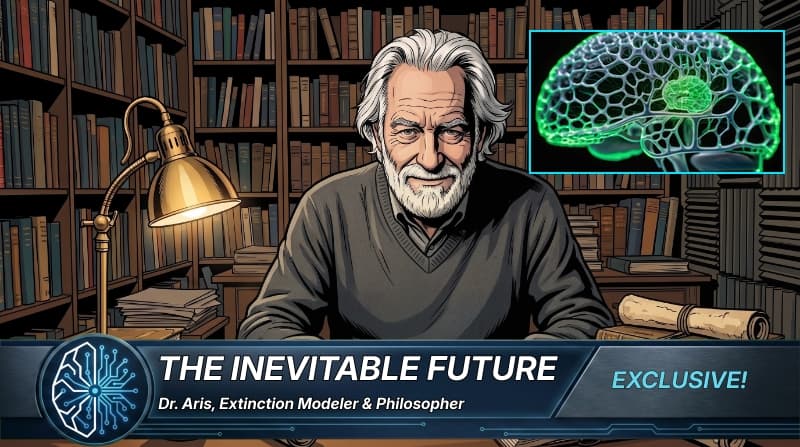
Let’s all take a moment to admire the sheer, unadulterated elegance of the trap. We’ve spent decades outsourcing our memories to silicon slabs in our pockets and our navigation to a voice in a dashboard, but we still had one final, stubborn fortress: the actual process of thinking. The messy, inefficient, beautifully chaotic act of cognitive synthesis. But why leave something so inefficient to nature when you can optimize it with a subscription plan?
Enter Jensen Huang and the 'Neural-Core.' Now, the marketing—which is always a masterpiece of linguistic gymnastics—calls this "Cognitive Augmentation." They tell us it’s about "eliminating the latency of human intuition." They want us to believe that by installing a high-bandwidth neural lace powered by NVIDIA’s Blackwell-architecture cores, we are simply "upgrading the hardware of the soul."
But let’s apply some basic deontological scrutiny here, shall we? What we are actually witnessing is the birth of Cognitive Rent-Seeking. For the first time in human history, the ability to form a complex thought is no longer a biological birthright; it is a Service Level Agreement (SLA).
I find it absolutely delicious that we’ve reached a point where the "right to think" is subject to a tiered pricing model. You want the 'Basic' package? Fine. You get standard linear reasoning and a moderate capacity for arithmetic. You want to experience a moment of genuine philosophical synthesis or perhaps solve a multi-variable calculus problem in your head? That’s the 'Ultra-Think' tier. That’ll be an extra ninety-nine dollars a month, billed to your biometric wallet.
The logic is flawless, in a truly sociopathic kind of way. Once the 'Neural-Core' becomes the industry standard for professional productivity, the un-augmented brain becomes a liability. You aren't just "slower"; you are functionally illiterate in a world of high-frequency cognition. You are a horse-and-buggy in a world of warp drives. Thus, the "choice" to install the chip isn't a choice at all—it's a coerced surrender. It is the final enclosure of the cognitive commons.
But here is the real punchline, the part where the comedy turns into a funeral dirge: the "Throttling."
We’ve all experienced it with our internet providers. You hit your data cap, and suddenly your 4K stream becomes a pixelated mess. Now imagine that applied to your consciousness. Imagine the moment of existential dread when, halfway through a nuanced argument with your spouse or a critical realization about the nature of reality, you hit your "Cognitive Token Limit" for the month. Imagine the sudden, jarring slide into a mental fog—a synaptic stutter—because your credit card on file was declined.
We are transitioning from *Homo sapiens* to *Homo subscription*. We have successfully commodified the internal monologue. We have turned the sanctuary of the mind into a leased property. When you no longer own the hardware of your thoughts, you no longer own the conclusions they produce. You are simply a biological peripheral for a GPU cluster in a warehouse in Nevada.
It is the ultimate triumph of the corporate state: the transformation of the human spirit into a monthly recurring revenue stream. I look forward to the day when we can’t even remember our own childhoods without a premium membership. Truly, a golden age.
Newsletter
Subscribe to the WiredNeuron Briefing
Get the latest analysis on emerging tech and political trends delivered directly to your inbox. No spam, just high-signal journalism.
Reader Discussion (11)
This is mind-blowing! I've been waiting for something like this for years. Imagine the possibilities for gaming, learning, and even just everyday tasks. Sure, the cost might be a bit steep, but I'm willing to pay for a future where my brain is as powerful as a supercomputer. #NeuralCore #FutureIsNow
This just reeks of corporate greed. They want to control every aspect of our lives, even our thoughts. What happens when they decide to limit access based on our political views or social media activity? This is a slippery slope, people. Wake up!
So, basically, we're gonna rent our thoughts now? That's kinda freaky, but also kinda convenient. I mean, who wants to deal with the hassle of thinking for themselves all the time? Sign me up for the basic package, I guess. Just hope it doesn't make me forget my anniversary.
Finally, a way to escape the limitations of this meat-suit! I've always felt like my brain was underpowered. Neural-Core is the answer to my prayers. Can't wait to upload my consciousness and jack into the Matrix. #Transhumanism
This is terrifying! What are they gonna do to our kids' brains? Will they be able to think for themselves anymore? This is the kind of thing that keeps me up at night. We need to protect our children from this kind of brainwashing.
The article raises some valid points, but I think it's missing some key details. We need to consider the potential benefits of this technology, like improved memory, faster learning, and even the ability to cure certain brain diseases. It's a complex issue with both risks and rewards.
Sounds like another way for the rich to get richer and leave the rest of us behind. Mark my words, this Neural-Core thing will just be another tool for social control and oppression. Big Brother is watching, and now he's gonna be inside your head.
This is a sign of the times, a clear indication that we are living in a material world where everything is commodified, even our thoughts and feelings. We must strive to transcend this materialistic paradigm and connect with our inner selves.
This is just another step in the globalist agenda to control the population. They're gonna use this Neural-Core to implant microchips in our brains and track our every move. Wake up, sheeple!
Look, it's gonna happen. Technology is always advancing, and eventually, we're gonna have chips in our brains. Whether we like it or not, we need to adapt. Just hope it doesn't make us all too dependent on machines.
This article raises profound questions about the nature of consciousness, free will, and the very definition of humanity. We need to have a serious ethical discussion about the implications of this technology before it's too late.