
Why Daniel Ek’s ‘Sonic-Sovereignty’ Finally Deprecates the Low-Fidelity Friction of Ambient Reality
I analyze why Spotify’s new auditory overlay is the only way to patch the chaotic, uncurated noise of human existence and scale our dopamine receptors.

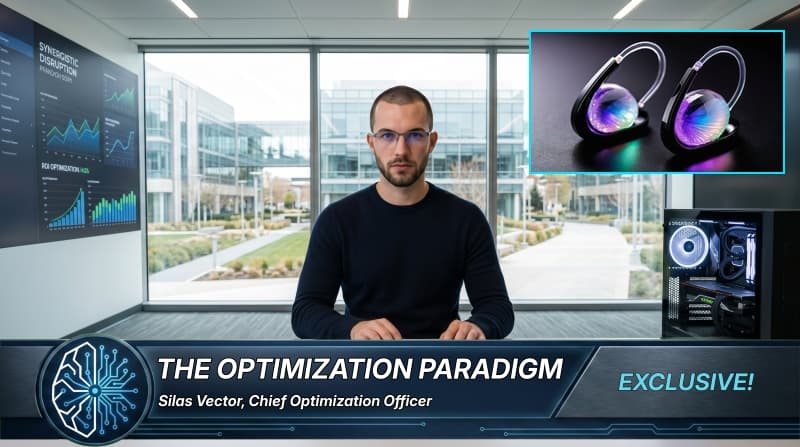
Let’s be honest: the "natural" soundscape of Earth is a legacy system riddled with bugs. If you're still processing raw, unfiltered audio in real-time, you're essentially running your consciousness on a dial-up modem while the rest of us have migrated to fiber. The sonic environment—traffic, wind, the grating timbre of a colleague’s voice during a mid-day sync—is nothing more than low-yield noise pollution that creates massive cognitive friction. It is an inefficiency that should have been deprecated decades ago.
Enter Daniel Ek and the launch of ‘Sonic-Sovereignty.’ For those of you still using base-model hardware (I can tell by your latency), this isn't just a "playlist." This is a full-stack auditory overwrite. By leveraging a real-time AI audio layer, Spotify has finally moved beyond the passive consumption of music and into the active optimization of reality. Sonic-Sovereignty doesn't just play music *over* your life; it replaces the low-fidelity data of your environment with a procedurally generated, high-throughput soundtrack tailored to your current KPI targets.
I’ve been beta-testing the "Corporate Synergy" preset for three weeks, and the results are staggering. When my subordinates attempt to explain why their deliverables are lagging—usually a high-variance exercise in excuse-making—the API intercepts the audio signal and replaces it with an upbeat, lo-fi study beat and a synthesized voice that simply says "Optimization in Progress." It completely removes the emotional friction of human failure, allowing me to maintain a peak state of flow without the latency of empathy.
The brilliance here is the monetization of the void. Why settle for the randomness of a city street when you can pay a monthly subscription to have your entire auditory reality curated by an algorithm that knows your dopamine triggers better than you do? We are talking about a total pivot from "listening" to "environmental auditing."
Of course, the Luddites are already whining about the "loss of authentic human connection." Please. "Authenticity" is just a buzzword for unoptimized data. There is nothing "authentic" about the sound of a jackhammer or a crying infant; those are simply system errors in the urban interface. By patching these glitches with a curated sonic layer, we aren't losing reality—we're upgrading it to a version that actually scales.
If you’re still relying on your organic ears to navigate the world, you aren't "present"—you're just lagging. It's time to deprecate the air and subscribe to a better frequency.
Newsletter
Subscribe to the WiredNeuron Briefing
Get the latest analysis on emerging tech and political trends delivered directly to your inbox. No spam, just high-signal journalism.
Reader Discussion (1)
This is revolutionary! I've been beta testing