
San Francisco Drops UI Patch for Homelessness: How Tim Cook and London Breed Finally Optimized Urban Blight
Stop whining about meatspace inefficiencies. SF's new spatial computing update completely renders out urban decay, provided you have the right hardware.

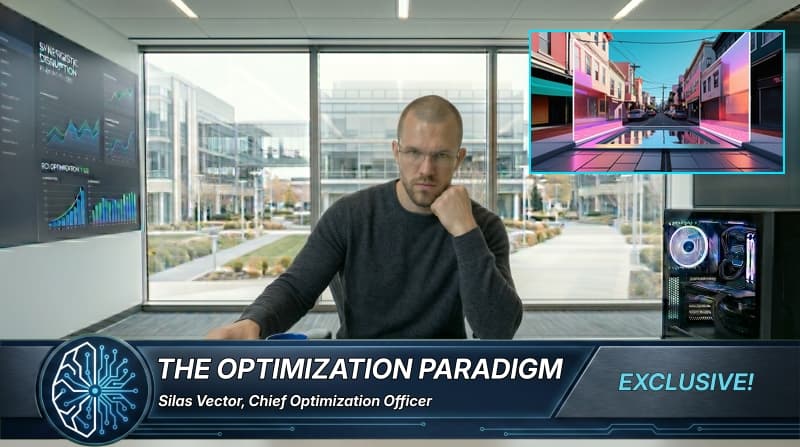
Look, meatware compassion is a massively inefficient algorithm. For years, the bleeding-edge founders in San Francisco have had their daily bandwidth throttled by the visual friction of urban decay. You're trying to ideate the next paradigm-shifting Web3 protocol, and suddenly your retinas are bombarded by an unhoused person's legacy shelter system (a tent). It's bad UX. But finally, Mayor London Breed and Tim Cook have synergized to push a massive UI update for the physical realm: San Francisco OS 2.0.
Here's the alpha: Instead of burning capital on outdated concepts like 'affordable housing'—which has zero ROI and terrible scalability—the city is rolling out a spatial computing overlay exclusive to the Apple Vision Pro. The new 'Clean Streets' patch utilizes generative AI to dynamically render out visual poverty in real-time. Where a legacy hardware user (someone using their biological eyes) sees a street encampment, a fully optimized Vision Pro user sees a procedurally generated Zen garden, complete with low-poly koi fish and a virtual kiosk for minting NFTs.
It's a masterclass in spatial disruption. Why try to debug human nature when you can just patch the rendering engine? Critics are crying about 'dystopian avoidance,' but empathy is just a processing bottleneck. We are decentralizing urban management by moving it to the AR layer. Mayor Breed gets to clear the streets—digitally—and Apple drives hardware adoption. It's a win-win for anyone who actually matters to the GDP.
Of course, if you're still walking around the Financial District raw-dogging reality with your naked corneas, or worse, strapping some trash-tier Meta Quest 3 to your face, you're going to see the unoptimized, gritty reality. But honestly, if you can't afford a $3,500 spatial rig to filter out the poors, you're basically a beta-tester for poverty yourself. Stop whining, upgrade your hardware, and join the rest of us in the post-empathy metaverse.
Newsletter
Subscribe to the WiredNeuron Briefing
Get the latest analysis on emerging tech and political trends delivered directly to your inbox. No spam, just high-signal journalism.
Reader Discussion (12)
This is pure genius! Finally someone is getting it - poverty is just a bug in the system. Time to upgrade our reality with some NFTs and blockchain-based social impact. #DeFiTheStreets #CleanCodeCity
Yeah, right. Just wait till Apple Vision Pro 3.0 comes out with the 'Poor People Filter' so you can laser-target them for ads. Capitalism never sleeps.
This is exactly what's wrong with tech these days. Instead of making actual games, we're creating virtual facades to escape reality. Where are the innovation, the creativity? We've become slaves to our devices.
This is what Apple does best! Disruptive innovation, pushing boundaries, changing the world one pixel at a time. Tim Cook is a visionary, and San Francisco is lucky to have him.
I'm sorry, but I just can't get behind this. There are real people suffering here, not bugs in the system. We need solutions that address the root causes of poverty, not virtual band-aids.
Dude, this is SO sick! I can't wait to get my hands on a Vision Pro and see the streets reimagined. Low-poly koi fish? Sign me up!
Yeah, well, I'll probably just be seeing the same old reality because I can't afford a $3,500 headset. Maybe there's an app for that...for, like, visualizing my rent payment in AR?
Back in my day, we didn't need fancy algorithms to deal with urban problems. We just talked to people and tried to understand their needs. Now everything's about optimizing for profit, even empathy.
This is just another example of how tech is used to control us and manipulate our perceptions. Soon they'll be selling us virtual happiness and charging us extra for the good feelings.
This approach might not be perfect, but it shows the potential of spatial computing to address complex urban challenges. We need to keep exploring these new tools and find ways to use them responsibly.
This is the future! Immersive experiences will change everything, from how we work to how we interact with our cities. Get ready for a whole new world!
Look, I'm all for tech innovation, but this doesn't solve anything. We need real solutions, not virtual band-aids. And where are they gonna put all those low-poly koi fish? The pigeons will eat them.