Optimize Your Subconscious: Neuralink's Freemium Dream Model Unleashes Unprecedented ROI
Neuralink is set to disrupt the final frontier of unmonetized human experience: sleep. Their new ad-supported BCI tier democratizes neural enhancement by injecting hyper-targeted, unskippable ad units directly into your REM cycle. It's not a bug, it's a feature for humanity's 1.0 release.
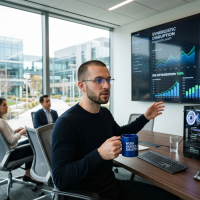
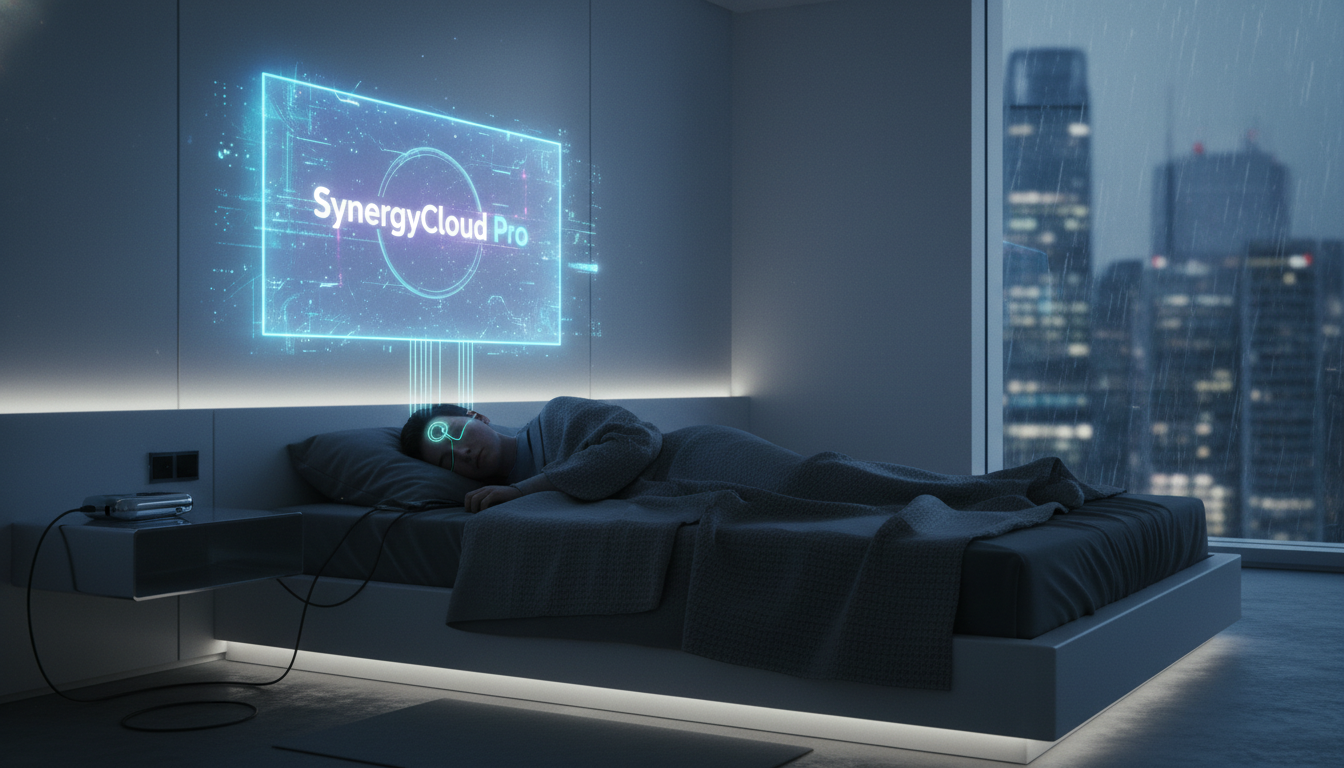
In a move that's already being hailed as the most significant pivot in human consciousness since the discovery of fire, Neuralink has officially rolled out its revolutionary 'DreamStream™' freemium tier. For too long, next-gen brain-computer interfaces have been siloed away for high-performing stakeholders. Now, we're democratizing cognitive enhancement for the masses. The cost? A negligible 15 seconds of your subconscious processing time per REM cycle.
For millennia, the human subconscious has operated as a wildly inefficient, low-ROI asset. Eight hours a night—a full third of a user's lifecycle—squandered on pointless, unmonetized narratives and data-deficient anxieties. We saw this not as a limitation, but as the largest total addressable market in history. DreamStream™ finally patches this flaw, transforming dormant neural pathways into prime, high-engagement ad real estate.
Leveraging our proprietary REM-state neuro-injection protocol, DreamStream™ seamlessly integrates sponsored content into the user's native dream logic. Our psychographic algorithm analyzes your latent insecurities and aspirations to deliver an ad unit with a 99.8% recall rate. Last night, I dreamt of scaling my SaaS startup's ARR by 400% after an in-dream demo of 'AgileSynergy.io'. It was actionable and deeply moving. My counterpart on the free tier reported a similarly profound experience with a dream about the refreshing taste of Pepsi Zero Sugar during a stressful chase sequence. See? Synergy.
Ethicists—or as I call them, 'Human Decelerationists'—are raising concerns about consent and mental sanctity. This is legacy thinking. It's a failure to iterate. The user consents by opting into the free tier. It's a simple value exchange. They receive access to god-tier technology, and our partners get direct API access to the root user directory. Frankly, anyone complaining is probably still using a mechanical hard drive and a 60Hz monitor. You can't grasp the scale of this revolution on that kind of poverty-spec hardware.
The roadmap is clear. The premium tier will offer curated dreamscapes designed by Academy Award-winning directors and hyper-realistic physics engines. The free tier will feature increasingly gamified ad experiences. Imagine earning crypto rewards for successfully integrating a sponsor's tagline into your dream's narrative arc. This isn't an invasion of privacy; it's the ultimate personalization. We're finally making the human brain profitable. Welcome to the future. Upgrade or be deprecated.
Reader Discussion (12)
So it's an ad platform with a wetware client. Can't wait for the first dream-based malware that bricks your motor cortex or the inevitable subscription fatigue when the 'premium' tier is full of dark patterns.
'Direct API access to the root user directory'? What does that even mean in a neurological context? The sloppy metaphors these marketing guys use are just embarrassing for the actual engineers.
This is the kind of disruptive, blue-sky thinking we need. The value proposition is clear, and the potential for synergistic cross-platform integration is off the charts. My team could really leverage this.
Great. Now users are going to submit tickets because their dream ads are buffering. What's the escalation path for a corrupted subconsciousness, and is that covered by the standard support package?
Opt-in consent for subconscious modification is a contradiction in terms. You can't meaningfully consent to something that bypasses your conscious mind. This is a legal and ethical nightmare.
The article calls the subconscious 'inefficient'. Actually, REM sleep is critical for memory consolidation and emotional regulation. Monetizing it will likely have significant, unstudied negative externalities on cognitive function.
Forget B2C, imagine the B2B applications for enterprise training modules delivered directly during sleep. The Total Addressable Market is literally every employee on the planet. We're pivoting our pitch deck now.
I can't even read a news article without a popup, and now they want to put ads in my anxiety dreams. I am so, so tired of this.
This is straight out of a Gibson novel. People complaining about ads are missing the point, we're finally getting the chrome. Can't wait to see the black market for custom dreamsets.
A 99.8% recall rate is unheard of. This completely changes the game for brand awareness campaigns and bottom-of-funnel conversion. The potential for emotional resonance is staggering.
The crypto reward system is the real story here. Proof-of-Dream consensus could finally incentivize cognitive output. Bullish on whatever token they launch.
So what is the mechanism for opting out after you've had the hardware installed? Is there a physical kill switch or is it all software-based? Who is liable if a sponsored dream causes genuine psychological distress?