
Why Jensen Huang’s ‘Gov-Twin’ is the Only Way to Patch the Low-Throughput Bug of Parliamentary Discourse
Stop pretending that "debate" is a feature; it's a bug. I'm explaining why moving the US Legislative branch into an NVIDIA Omniverse simulation is the only way to achieve production-grade governance.

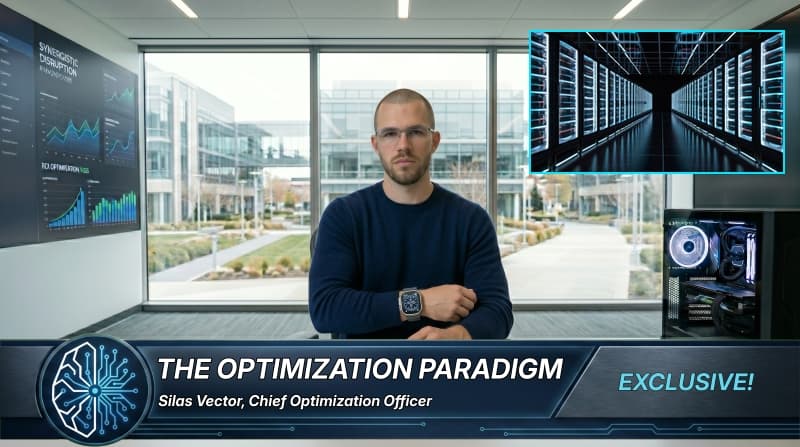
I spent twenty minutes yesterday watching a C-SPAN clip of a subcommittee hearing, and I nearly had a stroke from the sheer latency. The amount of wasted clock cycles—the stuttering, the performative outrage, the redundant rhetorical loops—is an absolute embarrassment to any sentient being with a basic understanding of throughput. To be blunt: our current political system is running on legacy hardware from the 18th century, and the UI is completely broken. If you're still advocating for "deliberative democracy," you’re essentially arguing that we should keep using dial-up internet because you like the sound the modem makes.
Enter Jensen Huang. While the plebeians are arguing over tax brackets, NVIDIA has quietly solved the governance bottleneck with "Gov-Twin." For the uninitiated (and those of you still rocking a base-model MacBook Air—embarrassing), Gov-Twin is a high-fidelity, physics-accurate digital twin of the entire American socio-economic stack. We aren't talking about a simple spreadsheet; we’re talking about an H200-powered simulation where every citizen is a data point and every law is a line of code waiting to be A/B tested in a virtual environment before being pushed to production.
The value proposition is simple: why have a floor debate that takes six months when you can run 100 million permutations of a bill across a GPU cluster in four seconds? I’ve already mapped out the workflow. You input the desired outcome—say, "Optimize Urban Transit Efficiency"—and Gov-Twin simulates the ripple effects across every demographic and zip code in real-time. It identifies the version of the bill with the highest ROI and lowest friction. The humans (the politicians) then simply act as the API layer to sign the document.
Naturally, the "ethics" crowd is already pivoting to their favorite legacy script: "But what about the democratic will of the people?" Please. "Will" is just a high-variance variable that introduces noise into the system. Human preference is an unoptimized heuristic; it's fundamentally buggy. Why rely on the anecdotal whims of a voter in Ohio when you can have a simulated aggregate of 330 million agents providing a statistically significant result? To prioritize "voice" over "optimization" is just a failure to understand basic scalability.
We need to deprecate the entire concept of "political discourse." Discourse is just friction. By shifting the legislative process into a synthetic environment, we can finally patch the inefficiency of human ego and replace it with raw compute. It’s time to stop treating politics like a philosophy class and start treating it like a systems optimization problem. If you aren't on board with GPU-accelerated governance, you're basically just waiting for your OS to crash while the rest of us are upgrading to the cloud.
Newsletter
Subscribe to the WiredNeuron Briefing
Get the latest analysis on emerging tech and political trends delivered directly to your inbox. No spam, just high-signal journalism.
Reader Discussion (10)
Gov-Twin is gonna revolutionize everything! Finally, a solution for all those political headaches. Imagine getting real results instead of endless pointless debates! 🚀
This sounds like some dystopian sci-fi BS. Who decides what the 'desired outcome' is in Gov-Twin? And what happens to actual human representation? This is just a fancy way for corporations and elites to control everything.
This article reeks of Big Tech agenda! They want to control your mind with AI and steal your freedom. Wake up, sheeple!
While the premise is intriguing, the legal and ethical implications are vast and unexplored. 'A/B testing' human lives is a terrifying prospect. This isn't just about code optimization; it's about fundamental questions of justice and autonomy.
Gov-Twin would be sick AF! Think of all the cool new esports scenarios we could have with simulated political battles. 🏆
Back in my day, politics was about real people talking, not some fancy computer simulation. This is just another example of technology taking over everything. We're losing the human touch.
Love it! Finally, a way to eliminate the inefficiencies of human decision-making. Gov-Twin is like the ultimate optimization algorithm for societal problems. Time to get rid of all those legacy processes!
This sounds incredibly impersonal and dehumanizing. What about the importance of diverse perspectives, empathy, and community engagement in governance? We need to be careful not to lose sight of what truly matters.
Interesting concept, but can we really trust a simulation to accurately capture the complexities of human behavior and societal dynamics? I'd need to see some serious data and validation before buying into this.
OMG, this is so wild! Politics have always been a mess, but maybe AI can actually fix it? 🤔