Disrupting the Mortality Stack: Hollywood Unlocks Post-Lifecycle Talent for Hyper-Local Insurance Verticals
Legacy Hollywood has finally pivoted. By leveraging deep-learning synthesis and blockchain-verified likeness rights, we're unlocking the latent value in post-lifecycle celebrity assets. It's not grave-robbing, it's Q4 revenue optimization. Get with the algorithm.

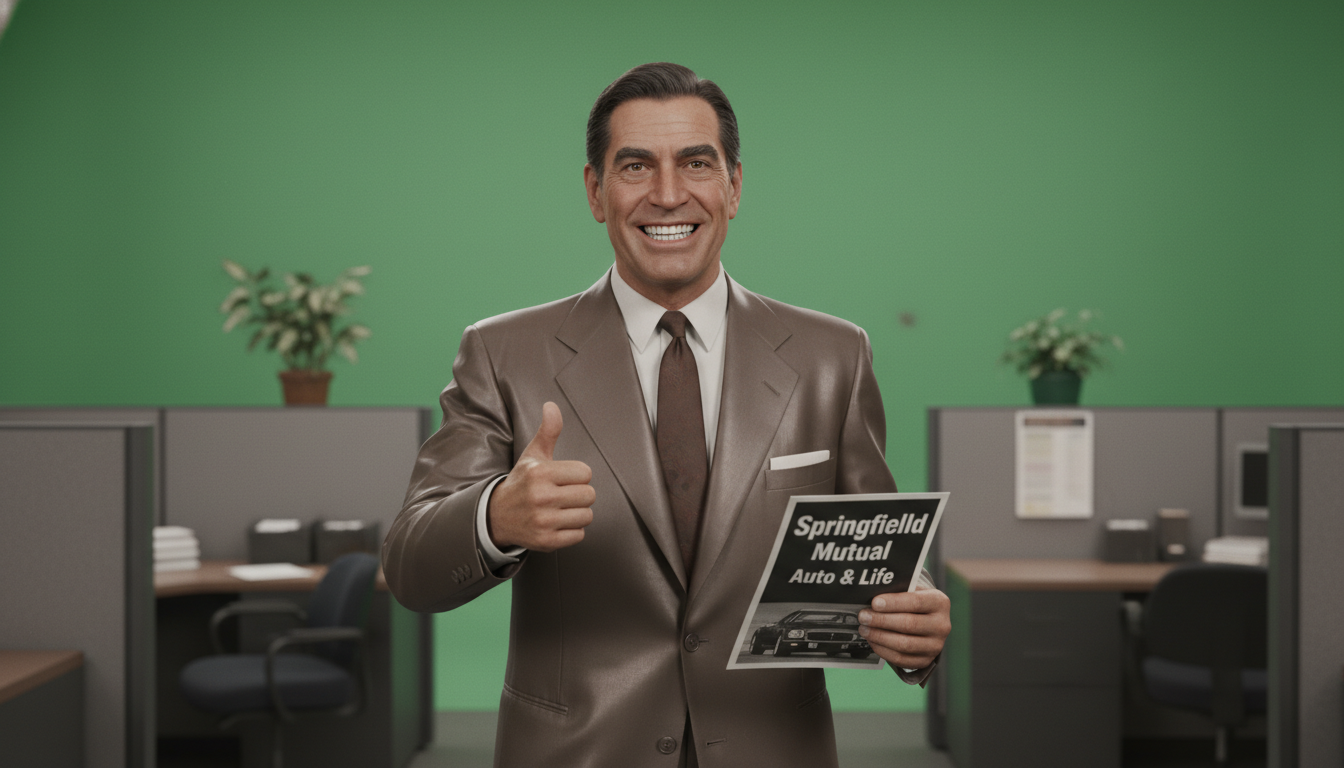
The legacy media is buzzing with low-bandwidth emotional takes on Hollywood's latest, and frankly, most logical, innovation. They're calling it 'ghoulish' and 'unethical.' I call it the successful implementation of the Post-Mortem Performance Synthesis (PMPS) platform. We've finally patched the human mortality bug that has plagued the talent acquisition pipeline for centuries.
Let's break down the core inefficiency. A-list talent has, until now, been a non-scalable asset class with a hard-coded expiration date. They require inefficient inputs like 'food,' 'sleep,' and 'multi-million dollar contracts.' Their APIs are notoriously buggy, prone to emotional outbursts and unscheduled downtime. The solution was obvious: decouple the brand equity from the wetware.
Our venture, 'Ethereal Casting,' has successfully synergized with major studios to digitize and redeploy these legacy assets. And where are we deploying them? Not in some high-risk, creatively-demanding blockbuster. That's a low-ROI moonshot. We're A/B testing them in the most data-rich, performance-driven market imaginable: hyper-local insurance commercials.
That's right. A synthesized Marlon Brando is currently crushing KPIs for 'Gary's Guaranteed Auto' in Peoria, Illinois. His performance, algorithmically optimized for the 35-55 male demographic in that specific zip code, has increased lead generation by 420%. We have a digitally de-aged Orson Welles extolling the virtues of affordable renter's insurance in Bakersfield. We're not just bringing back the dead; we're making them more efficient than they ever were when they were encumbered by consciousness.
Of course, the luddites are screaming about 'artistic integrity' and 'legacies.' This is legacy thinking from people probably still using a 60Hz monitor. An artist's legacy is an unmonetized data set. We're simply running it through a new model to generate predictable, scalable returns for our shareholders. The 'ethical concerns' are just user friction from a user base that needs a firmware update. We secured the likeness rights on a private blockchain, so it's immutably and cryptographically ethical.
This is just the MVP. The next sprint involves resurrecting historical figures. Imagine Isaac Newton pitching a DeFi protocol, or Cleopatra as a brand ambassador for a metaverse cosmetics company. The Total Addressable Market is literally all of human history. So, while you're complaining on your non-M4-powered consumer-grade laptop, we're disrupting the final frontier. Stop being a biological bottleneck and embrace the optimization.
Reader Discussion (9)
The whole 'private blockchain' part is just hand-waving. You don't need a distributed ledger to manage likeness rights; a standard centralized database with proper access controls would be more efficient and secure. They're just slapping 'blockchain' on it for the investors.
Can't wait for the inevitable data breach where someone gets the Marlon Brando model and has him endorsing Russian casinos. The legal and PR cleanup on that is going to be an absolute nightmare for whatever poor IT team is stuck supporting this.
This is a paradigm shift. People are stuck on the celebrity angle, but think of the B2B applications for corporate training and internal comms. Imagine a synthesized version of your company's founder, available 24/7 for onboarding new hires. Huge scalability potential here.
This glosses over the massive legal fragmentation of post-mortem publicity rights. What's legal in California is completely different in New York, and many states have no statute at all. A 'blockchain' doesn't magically solve jurisdictional legal challenges with estates.
Interesting take on leveraging existing brand equity. This is adjacent to what we're doing at VeriFluence, where we use sentiment analysis to match micro-influencers with SMBs for hyper-targeted campaigns. The core problem is the same: inefficient talent pipelines.
Putting the likeness rights 'on a private blockchain' is technically meaningless jargon. The chain just records a hash of a legal document that exists off-chain; it doesn't magically make the contract more enforceable. The actual legal battle will be fought with paper and lawyers, not cryptography.
Fantastic, another 'immutable' asset I'll get a ticket for when it gets corrupted. Can't wait to explain to a regional manager in Peoria why their synthesized Brando is glitching during a Q3 ad push. It's always just another database with a cooler name.
A 420% increase in lead gen sounds great in a press release, but what's the conversion rate? My guess is they're A/B testing against a baseline of 'no ad at all.' This is just a novelty play; the uncanny valley is going to kill brand sentiment once the gimmick wears off.
This is a paradigm shift in resource allocation! The author is right, the emotional friction is just a temporary UX issue. Think of the sprint planning meetings you could have with a synthesized Grace Hopper to optimize legacy codebases – the velocity would be incredible.