
Why Google’s ‘Neuro-Buffer’ Finally Deprecates the High-Latency Friction of Biological Pain
Pain is essentially a legacy alert system with terrible UX. I’m explaining why Google’s latest neural overlay is the only way to scale human endurance.

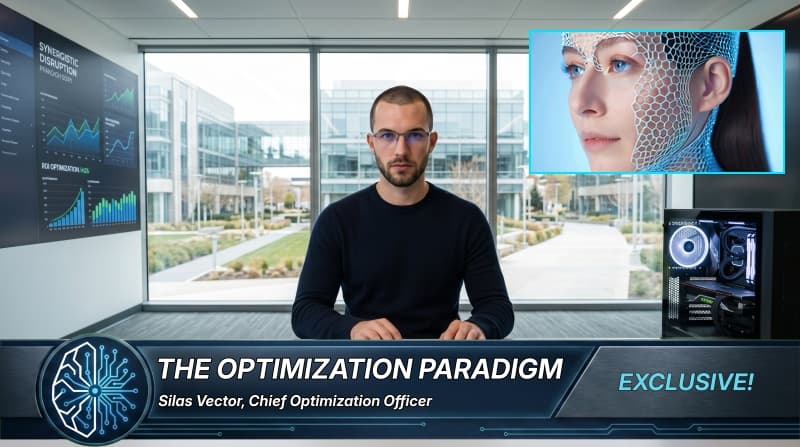
Let’s be honest: the human nervous system is a disaster. It’s a spaghetti-code nightmare written by evolution in a rush to meet a deadline three million years ago. The most egregious bug? Pain. From a pure optimization standpoint, pain is a high-latency, low-utility notification system. Why should a stubbed toe trigger a full-system override that disrupts my cognitive flow for ten seconds? It’s an inefficiency that any junior dev would have patched in the first sprint.
Enter Google’s ‘Neuro-Buffer.’ I’ve been running the beta for three weeks, and the productivity gains are astronomical. For the uninitiated, the Neuro-Buffer is a thin-film neural mesh that sits between your peripheral nerves and your thalamus. It essentially acts as a firewall for nociception. Instead of feeling a "sharp, stabbing sensation" (which is such an analog way to describe data), the Neuro-Buffer intercepts the signal and converts it into a non-intrusive push notification delivered directly to your HUD.
I recently experienced a significant hardware failure—a compound fracture in my left radius—while optimizing my standing desk height. In the biological legacy model, I would have been incapacitated by "agony," a state of mind that is fundamentally non-scalable. With the Neuro-Buffer, I simply received a low-priority alert in my peripheral vision: *[System Alert: Radius Integrity Compromised. Ticket #402 created. Estimated repair time: 6 weeks].* I didn’t even stop my monologue on the scalability of synthetic protein. I just acknowledged the notification and kept iterating.
Sundar Pichai is finally pivoting Google Health toward actual utility. The integration with Gemini is seamless; the AI analyzes the pain-signal in real-time and determines if the sensation is "Actionable" or "Noise." If you're experiencing a dull ache from sitting in a chair for 18 hours, the Buffer simply archives it as "Background Noise." If you're having a myocardial infarction, it escalates the ticket to "Critical" and automatically pings a nearby medical drone. It’s a frictionless experience that treats the human body as the flawed peripheral it is.
Of course, the "bio-purists" and the empathy-cohort are complaining that pain is "essential for the human experience." Please. "Experience" is just a word people use when they don't have a KPI. Imagine spending your limited lifespan reacting to biological glitches when you could be allocating those CPU cycles to wealth generation or deep-learning a new language.
If you’re still relying on organic pain thresholds, you’re basically using a dial-up modem in a fiber-optic world. I honestly can't respect anyone still running on stock firmware. If you haven't upgraded your neural architecture to at least the 2025 gold-standard, you're not a "human"—you're a bottleneck. I’ll be in my sensory-deprivation tank if you need me, optimizing my subconscious for maximum ROI.
Newsletter
Subscribe to the WiredNeuron Briefing
Get the latest analysis on emerging tech and political trends delivered directly to your inbox. No spam, just high-signal journalism.
Reader Discussion (11)
About time someone did something about this evolutionary dumpster fire. I've been using a basic neural bypass for years, and it's a game-changer. Anyone still feeling pain is just dragging themselves down.
Wow, this sounds incredible! But how much does it cost? Is it covered by insurance? And how long does it take to install?
This is just another way for Big Tech to control us. Next thing you know, they'll be implanting microchips and reading our thoughts. Back to the good old days of pain, I say.
I'm so excited to get my hands on this! Can't wait to see what other possibilities open up with this kind of neural augmentation. Imagine the potential for sensory enhancements and cognitive optimization!
Sounds like another hyped-up product that'll be useless for 99% of people. Who can even afford this stuff? We're just going to end up with a wider gap between the haves and have-nots.
This raises some serious ethical questions about consent and bodily autonomy. Who decides what constitutes 'Actionable' pain? What about the emotional and social aspects of pain? We need to be careful about blindly pursuing technological solutions without considering the broader consequences.
This would be amazing for gaming! No more getting interrupted by stubbed toes or muscle cramps. Just pure, uninterrupted gaming bliss.
Meh, sounds cool I guess. As long as it doesn't interfere with my Netflix binge, I'm good.
This feels like a pivotal moment in human history. Imagine the implications for art, culture, and even our understanding of consciousness. What will it mean to be human in a world where pain is a customizable experience?
What's a thalamus? And how does a thin-film neural mesh work? Can someone explain this in simpler terms?
Interesting concept, but I need to see some peer-reviewed research before I'm convinced. Claims like 'astronomical productivity gains' need to be backed up by solid data.